Again: You know the structure of arguments for your own benefit. It is not useful to impress, make friends, or to win games of dominance.
http://cheezburger.com/683525/meme-of-the-day-logical-fallacy-ref-will-help-you-keep-internet-arguments-fair
Not all fallacies are necessarily fallacies that are worth to be memorized. You should instead learn of how to identify fallacies with common sense, and your inborn capacity of reason, or critical thinking.
Here is a list of fallacies that might be interesting to
you: http://infidels.org/library/modern/mathew/logic.html#adhoc
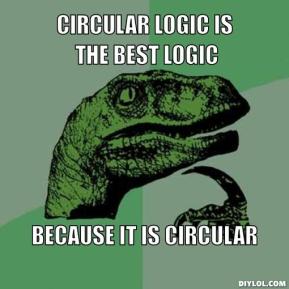
Source: https://teamresearch.files.wordpress.com/2013/06/philosoraptor-meme-generator-circular-logic-is-the-best-logic-because-it-is-circular-fa4a24.jpg?w=289&h=289
There is one important fallacy, however, that you should know.
The Fallacy Fallacy
The fallacy fallacy means that you might find a fallacy in the opponents argument and for that reason you dismiss his entire position. Only because you find a fallacy does, however, not mean that your opponent is wrong.
This is a very good podcast on the fallacy fallacy that I can recommend to you: https://youarenotsosmart.com/2016/01/22/yanss-067-the-fallacy-fallacy/
How to argue?
Here are some points on how you should argue. Notice that your argument should generally be directed against the central point of the other argument. All other points of an argument are minor in comparison to what is its central point. The lowest forms of refutation are also not good ways to argue at all.

Society's Puzzle
So does it bring anything to point out fallacies of your friends all the time?
Probably it does not. Forming a belief system does not depend on a single argument, but it includes a life project that is meaningful to that person, and people identify with this. For this reason, they will not drop their opinions, because you have a valid point. You need to accept that knowledge is produced in much larger processes.
My unqualified advice is, therefore: try to perform arguments that connect other facts to the larger picture. Do not try to disprove somebody. Focus on developing knowledge with somebody for yourself.

Emotional Connection
Instead of disagreeing with people, it is better to make a connection with somebody else. It is more important to connect with people than fighting over different beliefs, even if you have the better argument. Try to agree with people who have not the same position. At a certain moment of agreement, you start producing more informed opinions. This does not mean that you should accept racist beliefs, or that you need to tolerate inadequate positions, but that you accept the other as a person who has formed a position based on a life story.
So rather seek for emotional connection that is not solely based on your interests, preoccupations, and opinions. Very interesting approaches are found here:
http://acuriousquestion.com/ - an app that suggests interesting questions
http://www.nytimes.com/2015/01/11/fashion/no-37-big-wedding-or-small.html - 36 Questions that make you feel in love with another person (based on scientific experiments).
The Scientific Discourse
This discourse is lead to extend our knowledge and for this reason, we should be interested in disproving ourselves (see the confirmation bias that we have discussed before). The scientific discourse is different from other forms of connecting.
Galileos Fallacy (an interesting play)
Here is how Galileo could not bring his point through, because of certain dogma. We have to accept that dogma are historically grown structures that cannot be simply overturned. So we have to learn how to work from within:
Galileo: https://books.google.com/books?id=dW1_AwAAQBAJ&pg=PA33&dq=galileo+number+of+planeten&hl=de&sa=X&ved=0ahUKEwiJssbp99fOAhXHCh4KHUAtBNQQ6AEIJTAB#v=onepage&q=galileo%20number%20of%20planeten&f=false
Further Links on Fallacies
http://plato.stanford.edu/entries/fallacies/
http://infidels.org/library/modern/mathew/logic.html#adhoc

Couldn't help but read all the fallacies (not just the ad hoc).
ReplyDeleteREALLY loved the link to the Galileo book by Weintraub and hope to get it some time in the future and read it! Sounds fascinating. That era always frustrated me, when I think of "scientists" making such illogical arguments, and yet I'm drawn to writings about it. One of my fave books is "A World Lit Only by Fire". Until I read that I knew next to NOTHING of what really occurred during the Dark Ages, as US schools never actually cover that period; it was captivating--not quite as light-hearted/easy reading as the Weintraub book ;)
I can recommend Dr. Harrington's classes if you are interested in Medieval thoughts. After all the thoughts of Aristotle, for example, are not illogical, but they ignore the impact of empirical research. You will find many reasonable texts as, for example, from Aquinas. Nevertheless, this text is not ready yet, but I am glad that you read it.
ReplyDelete